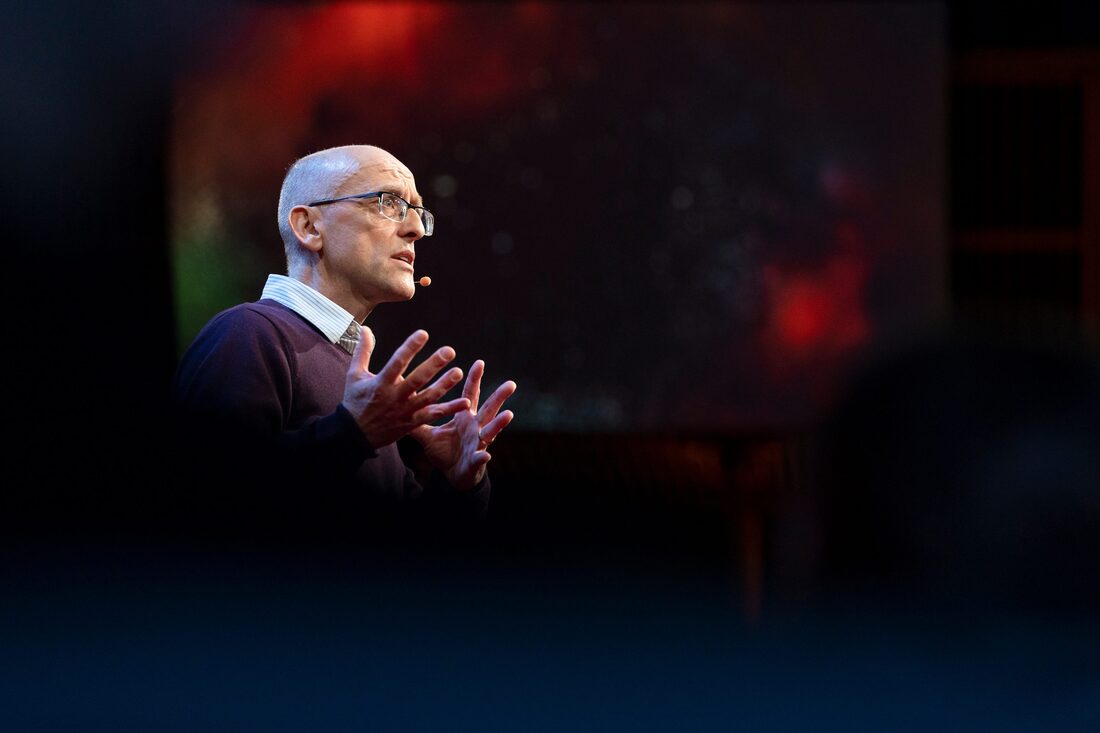
A bit about me
I'm a Northerner (a Boro fan) in exile on the South Coast of England.
If you've bothered to seek out this site then it's probably because of my outreach activities (books, talks, and so on).
So if you want to learn more about my books, or a bit more about me (although there's not much to tell), either scroll down or check out the tabs above.
My books
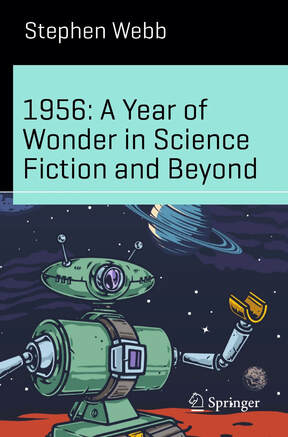
1956: A Year of Wonder in Science Fiction and Beyond
Published April 2026
1956 was the year of Suez; the Hungarian uprising; Elvis's rise; the peak of Cold War paranoia; the wedding of Grace Kelly to Prince Rainier; the first conference on AI; the first detection of the neutrino; the discovery of parity violation; numerous immortal sporting moments (Devon Loch, Laker's test, Trautmann's Cup Final, Mantle's "favourite summer", Larsen's perfect game (Bobby Fischer's perfect game too)); and on and on.
The year in SF saw the release of classic movies such as Forbidden Planet and Invasion of the Body Snatchers. The "Big 3" of Asimov/Heinlein/Clarke were at their peak. The magazines published numerous stories that went on to become classics.
I had so much fun researching this book!
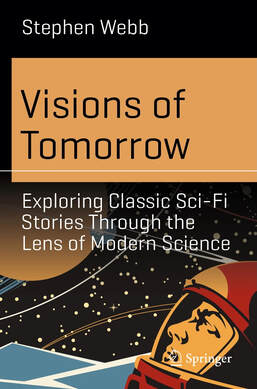
Visions of Tomorrow: Exploring Classic Sci-Fi Stories Through the Lens of Modern Science
Published February 2025
A follow-up to New Light Through Old Windows, this book contains 12 stories from authors such as Edgar Allan Poe, Algernon Blackwood, and Guy de Maupassant. As with the previous volume, each story appears alongside a discussion of the science as it was understood when the story was written, and the science as we understand it today.
My favourite stories in this volume are Saki's "Filboid Studge, the Story of a Mouse that Helped" (short, but very funny); Poe's "The Facts in the Case of M. Valdemar" (extremely creepy); and de Maupassant's "The Horla" (the story of a man's descent into madness, or of an alien monster?).
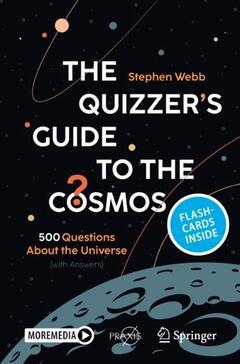
The Quizzer's Guide to the Cosmos: 500 Questions About the Universe (with Answers)
Published May 2024
The book contains 500 astronomy-related multiple-choice questions (with answers). The questions are arranged so that the answers provide an overview of the history of astronomy. Questions in the first chapter relate to the solar system. Later chapters take in the latest findings in cosmology. So if you want to know where you can see Galileo's middle finger; if you wonder whether the universe is infinite; if you worry about the chances of being hit by a rock from space ... this is the book for you.
The book comes with access to online flashcards, so if you prefer, you can take the quiz electronically and read the answers online.
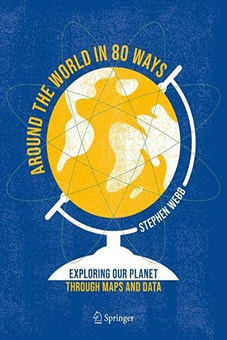
Around the World in 80 Ways: Exploring Our Planet Through Maps and Data
Published 2023
I had a lot of fun writing—and illustrating—this book. It contains 80 world maps and choropleths (thematic maps that use colour to illustrate some variable of interest), with each map accompanied by a short essay.
So if you want to find out where its safest to drive, where you are most likely to be murdered, or where you have the best chance of encountering a UFO—check out the maps here.
Wo sind sie alle? Fünfzig Lösungen für das Fermi-Paradoxon
Published 2021
My books have been translated into a number of different languages. I count this one as a distinct, separate title because it is not a translation of an existing book; it contains material that does not appear anywhere else.
The German translation was by Dr Matthias Delbrück.
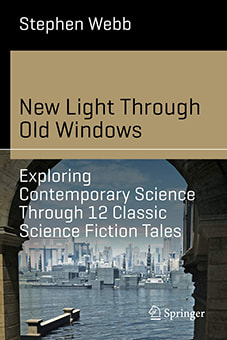
New Light Through Old Windows
Published 2019.
Isaac Newton wrote that "If I have seen further it is by standing on the shoulders of giants". The SF writers of today stand on the shoulders of the giants who wrote SF in years gone by — H.G. Wells, Arthur Conan Doyle, Jack London et al. This is an anthology of a dozen science fiction stories from those early giants, stories first published between 1858 and 1934. Each story appears alongside a discussion of the science as it was understood when the story was written, and the science as we understand it today.
From a review by Peter Heck in Asimov's magazine: "Here's a collection I wish had been around when I was taking high school science... A well-done realization of a worthy idea—I'd love to see many more books like this one. There's lots of fertile soil left."
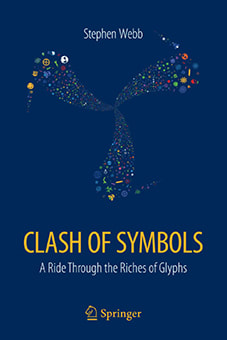
Clash of Symbols: A Ride Through the Riches of Glyphs
Published 2018
Ever wondered who chose pi to represent the ratio of a circle's diameter to its circumference? Or what the reasoning is behind the strange-looking command sign on an Apple keyboard? Or where the ubiquitous recycling sign originated? Well, this book is for those sorts of enquiring minds...
Here, you can find the story behind 100 glyphs.
Part 1 looks at some of the symbols we use in writing. Part 2 discusses glyphs used in politics, religion, and other aspects of everyday life. Part 3 covers the symbols used in astronomy (and, before we knew better, astrology). Part 4 examines some characters used in scientific work – most of which would also be familiar to the non-scientist. Finally, Part 5 looks at symbols used in mathematics.
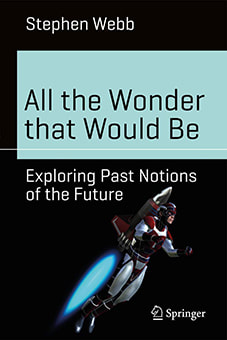
All the Wonder that Would Be: Exploring Past Notions of the Future
Published 2017
The SF community has, over the years, shared many assumptions about how the future would turn out. In this book I compare those old "weather forecasts" with reality in ten science fictional themes:
- aliens
- antigravity
- augmentation of the human body
- invisibility
- mad scientists
- nature of reality
- robots
- space travel
- time travel
- transportation
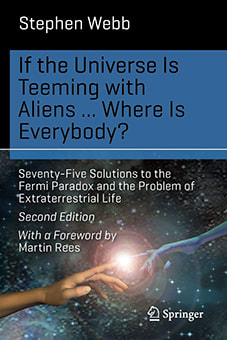
If the Universe is Teeming with Aliens ... Where is Everybody? 75 Solutions to the Fermi Paradox and the Problem of Extraterrestrial Life (2nd edition)
Published 2015.
My best-known title, and a best-seller.
This edition updates the earlier 2002 book, and describes a further 25 solutions and approaches.
Contains a foreword by Martin Rees, the Astronomer Royal.
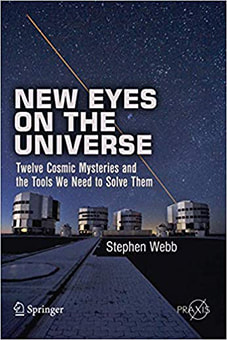
News Eyes on the Universe: Twelve Cosmic Mysteries and the Tools We Need to Solve Thems
Published 2012
We are living through a Golden Age in observational astronomy and cosmology: space telescopes are giving us better images of the cosmos while gravitational-wave observatories and neutrino telescopes are opening up entirely new windows on the universe.
This book looks at 12 unsolved problems in astronomy, ranging from the nature of the "dark" universe through to whether other Earths exist, and the new observatories that can help solve those problems.
Note: the book was published over decade ago, before LIGO discovered gravitational waves, before JWST was launched, and before TESS started finding exoplanets. Astronomy is advancing rapidly!
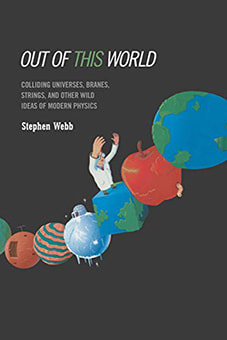
Out Of This World: Colliding Universes, Branes, Strings, & Other Wild Ideas of Modern Physics
Published 2004
Modern physics rests on two pillars. The standard model of particle physics, described in the language of quantum field theory, is astoundingly successful in accounting for events that happen on a microscopic scale. The general theory of relativity, which describes gravity in terms of the curvature of space, lets us understand the universe on a macroscopic scale.
But in some situations—such as the early universe or close to the singularity of a black hole—we need both descriptions of nature. So far, getting a successful quantum description of gravity has proven to be impossible.
This book outlines some of the ideas that theoretical physicists have investigated in order to unify gravity with the other forces of nature.
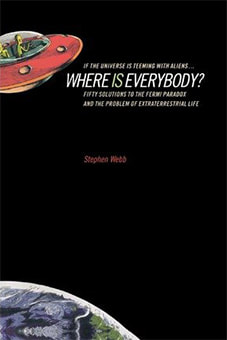
If the Universe is Teeming with Aliens ... Where is Everybody? 75 Solutions to the Fermi Paradox and the Problem of Extraterrestrial Life
Published 2002.
Winner of the SETI League Award; shortlisted for the Royal Society Prize for Science Books (then sponsored by Aventis, now by Insight Investment).
The 2nd edition (see above) contains a further 25 approaches to Fermi's question.
From a review in Science: "Webb offers coherent, understandable, and sometimes humorous coverage of a diverse range of topics. He provides readers with non-trivial insights into research fields they may not have encountered previously ... I think everyone who has ever considered the possibility that other intelligent civilizations exist elsewhere within our galaxy with enjoy Where is Everybody? They will find much to agree with, and much to argue about, in this very accessible volume."
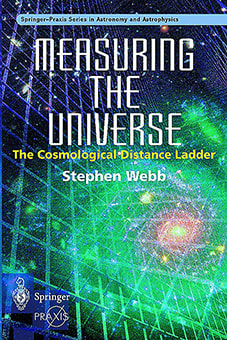
Measuring the Universe: The Cosmological Distance Ladder
Published 1999.
This book tells the story of how astronomers learned how big the universe is. It starts with how the ancient Greeks measured the size of our planet; it describes how astronomers determined the scale of the solar system and used that knowledge to get the distance to nearby stars; how that knowledge lets us understand the scale of our galaxy; and—step by step—how we determine distances on the largest scales in the universe.
The book uses some mathematics, at the level of calculus, but should be accessible to the serious amateur astronomer.
From Nature: "...an understandable and enjoyable textbook...Measuring the Universe hits the mark." From JBIS: "I thought I was familiar with the 'ladder' but this book has taught me a great deal."
Sundry other bits of writing
The following is a non-comprehensive list of some other forms of writing—a dozen or so pieces, ranging from fiction to research papers—that have appeared in a variety of publications over the years.
- The perils of prediction Or, how not to embarrass your future self — in: FOCUS, The British Science Fiction Association's Magazine for Writers (Winter 2026, No. 81) — a look at some successful (and unsuccesful) science fiction predictions
- The Fermi paradox in an age of discovery — in: Proc. International Astronomical Union, Volume 20, Symposium S387: (Toward) Discovery of Life beyond Earth and its Impact, December 2024, pp. 102–111 (Cambridge University Press, Cambridge, 2026) — a contribution to an interesting conference organised by Hermine Landt-Wilman and held at Durham University
- Area 37 — in: Mask, edited by Joyce, L. and Scofield, T. (St Ursin Press, Folkestone, 2021; pp209–222) — an SF tale that was a finalist in the HG Wells Short Story Competition; the competition was initiated several years ago by the late Reginald Turnill, whom I fondly remember reporting for the BBC on the Apollo space missions
- Instant expert: what is the Fermi paradox? — in: All About Space, vol 113, pp 46–47 (2021) — a small piece for a popular science magazine, to get readers quickly up to speed on Fermi's question
- Book review: Learning Analytics Explained — in: Innovations in Education and Teaching International, vol 54(6), pp. 625–6 (2017) — I have long been interested in the potential for computers to help with learning; the thoughtful use of big data in education has the potential to bring huge benefits
- Twitter use in physics conferences — in: Scientometrics, vol 108(3), pp 1267–1286 (2016) — a research paper, but one that is accessible and, I think, is interesting (if of little importance): different fields of physics use Twitter in quite different ways
- The alpha magnetic spectrometer — in: Patrick Moore's Yearbook of Astronomy 2016, edited by Moore, P. and Mason, J. (Macmillan Press, London, 2015; pp237–256) — a review of an experiment that hoped (and perhaps still hopes) to find clues to the nature of dark matter
- Book review: Learning {re}imagined — in: Innovations in Education and Teaching International, vol 52(5), pp. 571–2 (2015) — Another review of a book that discussed possible disruptions to the way we teach and how we learn; so far those disruptions have, unfortunately, not happened
- Ripples from the start of time? — in: Patrick Moore's Yearbook of Astronomy 2015, edited by Moore, P. and Mason, J. (Macmillan Press, London, 2014; pp243–265) — a review of an observation that, had it been correct, would have transformed cosmology; unfortunately it was a false alarm
- A memory of Patrick — in: Patrick Moore's Yearbook of Astronomy 2014, edited by Moore, P. and Mason, J. (Macmillan Press, London, 2013; pp208&ndash209) — a short recollection of my first encounter with the incomparable Patrick Moore
- Planck's new view of the universe — in: Patrick Moore's Yearbook of Astronomy, edited by Moore, P. and Mason, J. (Macmillan Press, London, 2013; pp210–228) — an overview of the results of the Planck mission's study of the cosmic microwave background
- Book review: The Elusive Wow! Searching for Extraterrestrial Intelligence — in: The Observatory, vol 132, 1230, pp. 57&ndash58 (2012) — A review of one man's heroic attempts to track down the source of the "Wow!" signal
- ALMA: the world's most complex telescope — in: Patrick Moore's Yearbook of Astronomy 2013, edited by Moore, P. and Mason, J. (Macmillan Press, London, 2012; pp187–203) — a look at what was then my favourite telescope; fickle person that I am, more recent instruments have taken my fancy!
- Pondering the Fermi paradox — in: Searching for Extraterrestrial Intelligence: SETI Past, Present, and Future, edited by H. Paul Schuch (Springer, New York, 2011; pp. 305–321) — An essay for a book in honour of the 60th anniversary of Frank Drake's pioneering Project Ozma
- The cosmic distance scale — in: Astrophysics Update: Topical and Timely Reviews on Astrophysics, edited by Mason, J. (Berlin, Springer, 2004) — an update of research on the cosmological distance ladder; such reviews date rapidly, however, given the progress in the field!
A bit more about me

I was born and raised in Middlesbrough, and still support the Boro.
My favourite author is Isaac Asimov. I collect Asimoviana — and am still looking for copies of the two wallcharts "A history of mathematics" and "A history of biology". If you own them and are looking to sell, then do please get in touch!
I adore Tom Lehrer, and can sing you The Elements song (but unfortunately I'm unable to play you the piano accompaniment).
What else? Well, I'm a TED speaker, have appeared as a guest on numerous radio shows and podcasts, and contributed to the occasional TV programme.
EDUCATION
University of Bristol – BSc (Hons) Physics – First Class
University of Manchester – PhD – Theoretical Particle Physics
PLACES I HAVE WORKED
- Dept of Physics, University of Cardiff (1993–95)
- School of Maths & Statistics, University of Sheffield (1995–98)
- Dept of Math. Sciences, University of Loughborough (1998–99)
- School of Inf. Sciences, Northumbria University (1999–2000)
- The Open University (2000–2006)
- University of Portsmouth (2006–2024)
- Blissful Retirement (2024–)
PROFESSIONAL MEMBERSHIPS AND AWARDS
- Member of the Institute of Physics (M. Inst. P.)
- Senior Fellow of the Higher Education Academy (SFHEA)
- Member of international editorial board (Springer S&F Series)
- Member of the UK SETI Research Network
- Member of the Lifeboat Foundation
- Project lead for the UK Advance HE Collaborative Award in Teaching Excellence (CATE 2022)
Contact me
Feel free to contact me using the form below: